

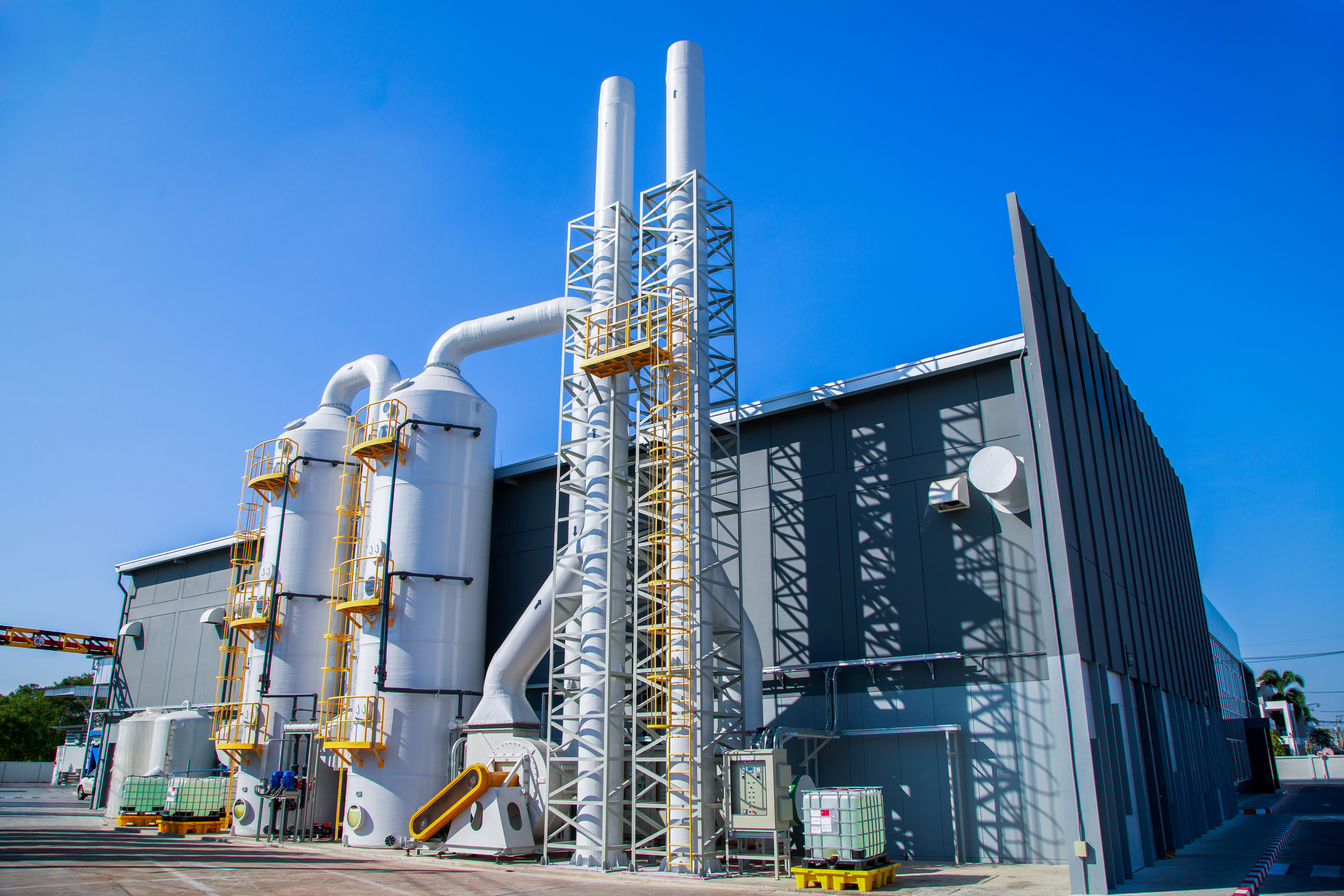
Industrial manufacturing, chemical processing, and metal finishing operations generate airborne contaminants that must be thoroughly treated before release into the atmosphere. Regulatory standards set by local environmental agencies require strict control over acid gases, solvent vapours, and particulate emissions. Wet fume scrubbers serve as a reliable line of defence for industrial air pollution control.
What Is a Wet Fume Scrubber?
A wet fume scrubber is an air pollution control system designed to remove harmful gases, acid mists, and soluble particulates from industrial exhaust streams. Instead of relying purely on dry media filtration, wet scrubbers introduce a scrubbing liquid—often water or a neutralising chemical solution—into direct contact with the contaminated airflow.
Through target contact mechanisms, dissolved gases and particulates are transferred from the air stream into the liquid phase, allowing clean air to exit safely into the environment.
Core Scrubbing Technologies
Depending on the specific industrial process, different scrubber configurations are deployed:
[ Contaminated Exhaust Air Entry ]
               │
               ▼
   ┌───────────────────────┐
   │ Packing Media Zone    │ ◄── [ Atomised Scrubbing Liquid Sprayed ]
   │ (Gaseous Contact Area)│
   └───────────────────────┘
               │
               ▼
   ┌───────────────────────┐
   │ Droplet Eliminator    │ ──► [ Clean Air Discharged to Atmosphere ]
   └───────────────────────┘
               │
               ▼
   [ Contaminant Neutralisation Tank ]
-
Packed Bed Scrubbers: The exhaust stream flows upward through a vessel filled with high-surface-area packing media while neutralising liquid is sprayed downward. This maximize contact area for gas absorption.
-
Venturi Scrubbers: High-velocity air streams atomize scrubbing liquid into tiny droplets to efficiently capture heavy particulate loads and sub-micron dusts.
-
Spray Towers: Open-vessel designs equipped with spray nozzles aimed at removing high-volume, easily absorbable gaseous contaminants.
Essential Components of a Durable Scrubber
Because wet scrubbers handle highly concentrated corrosive chemicals, their construction materials must withstand harsh operational environments:
-
Corrosion-Proof Shell: Constructed from thermoplastics like PPs, UPVC, or GRP-coated plastic to resist internal acid attack.
-
High-Efficiency Packing Media: Structured or random packing designs that maximise surface contact area between liquid and air while minimising pressure drop.
-
Mist Eliminator Modules: Positioned at the top of the scrubber column to catch liquid droplets, preventing chemical carryover into downstream ductwork and exhaust stacks.
-
Automated Chemical Dosing Systems: Sensors monitor pH and oxidation-reduction potential (ORP) in the fluid tank, automatically adding neutralising reagents as needed.
Key Benefits for Modern Operations
Installing a high-efficiency wet fume scrubbing system provides essential operational and compliance benefits:
-
Guaranteed Regulatory Compliance: Ensures plant emissions meet modern environmental safety guidelines and workplace exposure limits.
-
Protection of Plant Infrastructure: Neutralising acid fumes at the source prevents chemical degradation of roof structures, adjacent equipment, and outdoor exhaust stacks.
-
Safe Working Environments: Removing harmful fumes directly from source locations keeps indoor factory floor air breathable and safe for personnel.
-
Flexible Process Integration: Scrubbers can be tailored to suit varied airflow rates, temperature profiles, and chemical compositions.
Invest in robust air scrubbing equipment to safeguard your facility, maintain regulatory compliance, and promote clean industrial operation.
