

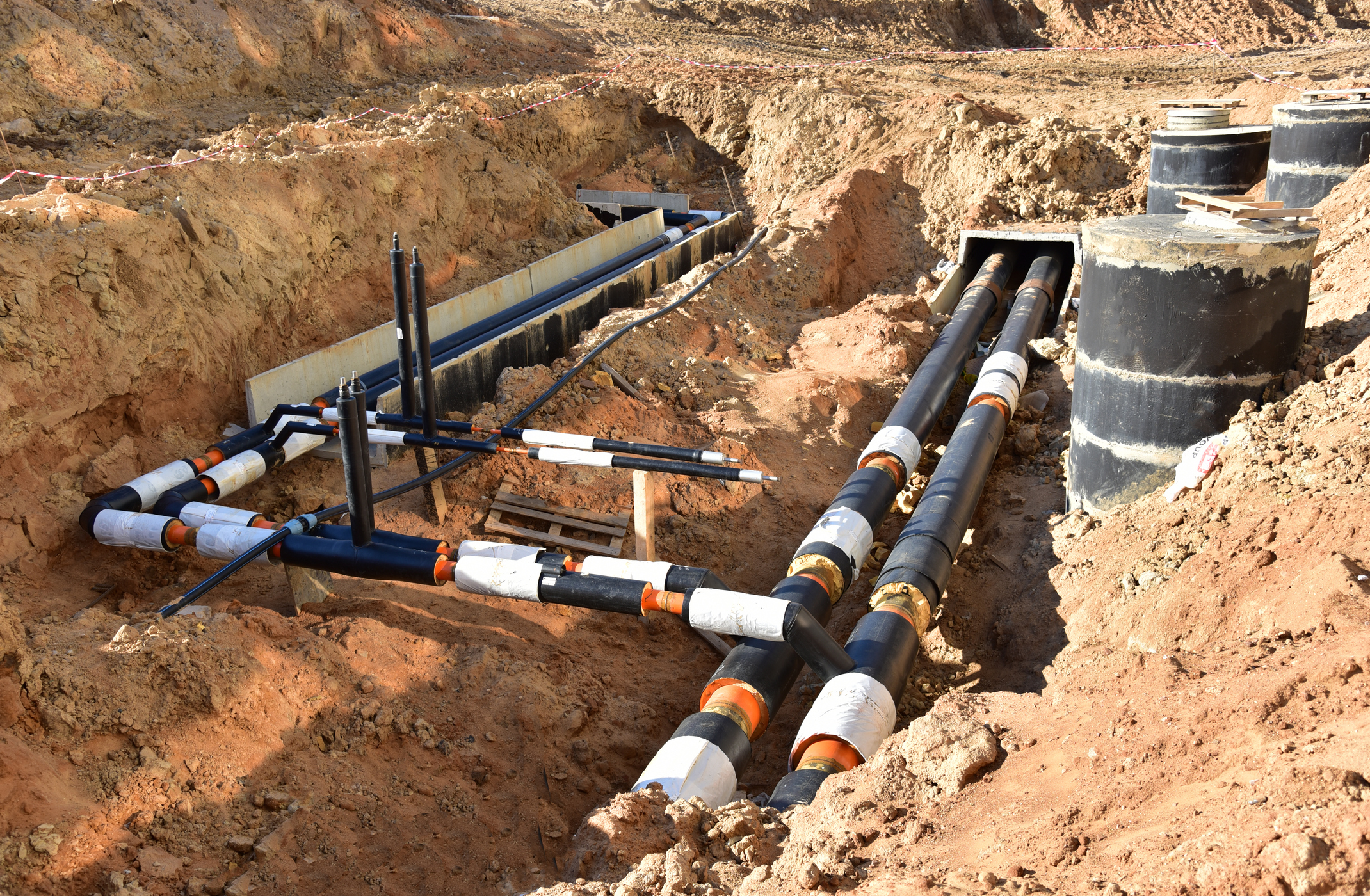
When designing modern industrial, research, or municipal facilities, ground-level space is often at a premium. Integrating complex extraction systems overhead can clutter building ceilings, obstruct overhead cranes, or breach local height planning restrictions. Routing ductwork underground offers a practical solution—provided the ducting is engineered to handle harsh subterranean conditions.
The Structural Challenges of Underground Ducting
Routing ventilation infrastructure beneath concrete slabs or beneath roadways introduces distinct structural challenges that above-ground systems do not encounter:
-
Static Ground Loads: Deep soil layers and heavy concrete backfill exert continuous downward compression forces on buried duct walls.
-
Dynamic Traffic Loads: Surface traffic from heavy lorries, forklifts, and yard vehicles generates repetitive soil compression spikes.
-
Groundwater Infiltration: High water tables can surround buried ductwork, exerting external hydrostatic pressure that risks collapsing standard thin-walled materials.
-
Soil Chemistry: Corrosive soil conditions, acidic groundwater, and chemical spills can attack duct exteriors.
Traditional metal or concrete underground pipes often fail prematurely in these environments due to corrosion, root intrusion, or joint cracking.
Engineering Thermoplastics for Subterranean Performance
To withstand combined soil loading and internal chemical exposure, underground ducting systems rely on high-grade thermoplastics like Polypropylene (PPs) and High-Density Polyethylene (HDPE).
+-------------------------------------------------------------------------+
|                  Underground Duct System Layers                         |
+-------------------------------------------------------------------------+
| [ Concrete Slab / Soil Surface ]                                        |
|   │                                                                     |
|   ├── Compacted Granular Backfill (Protects Against Point Loading)      |
|   │                                                                     |
|   └── [ Heavy-Wall Thermoplastic Duct Pipe ]                           |
|         ├── Interior: Smooth, Chemical-Resistant Bore                      |
|         └── Joints: Fully Homogenous Fusion-Welded Seams                  |
+-------------------------------------------------------------------------+
Heavy-Wall Profile Design
Underground plastic ductwork uses increased wall thicknesses and external ring-stiffening rib profiles. This structural design resists deflection under ground movement while preserving a smooth internal bore for smooth airflow.
Homogenous Fusion Welding
Underground air leaks can draw soil, water, and debris into exhaust streams, while outward leaks risk soil contamination. Plastic ducting uses electrofusion or extrusion butt-welding to turn separate duct sections into a seamless, leak-proof buried run.
Top Industrial Applications
1. Laboratory & Research Campuses
Distributing utility air extraction underground keeps research facilities uncluttered, aesthetically clean, and quiet, moving fan noise away from primary workspace interiors.
2. Water & Sewage Treatment Works
Wastewater facilities often generate aggressive hydrogen sulfide gases. Routing corrosion-proof plastic ductwork underground between processing tanks protects infrastructure while containing harsh odours.
3. Chemical & Industrial Manufacturing
High-volume industrial plants route hazardous chemical exhausts safely beneath floor slabs directly to centralized outdoor scrubber plants, keeping main factory floors clear.
Essential Best Practices for Underground Installation
-
Correct Bedding & Backfill: Surround buried ductwork with clean, compacted granular material to distribute external soil loading evenly.
-
Thermal Expansion Planning: Account for ground thermal variations by integrating expansion zones or flexible underground layout bends.
-
Integrated Drainage Points: Position low-point drain sumps within underground runs so condensed moisture can be safely removed without restricting airflow.
By combining heavy-wall engineering plastics with fusion-welding techniques, underground ductwork systems provide reliable, space-efficient, and long-term air extraction performance.
